
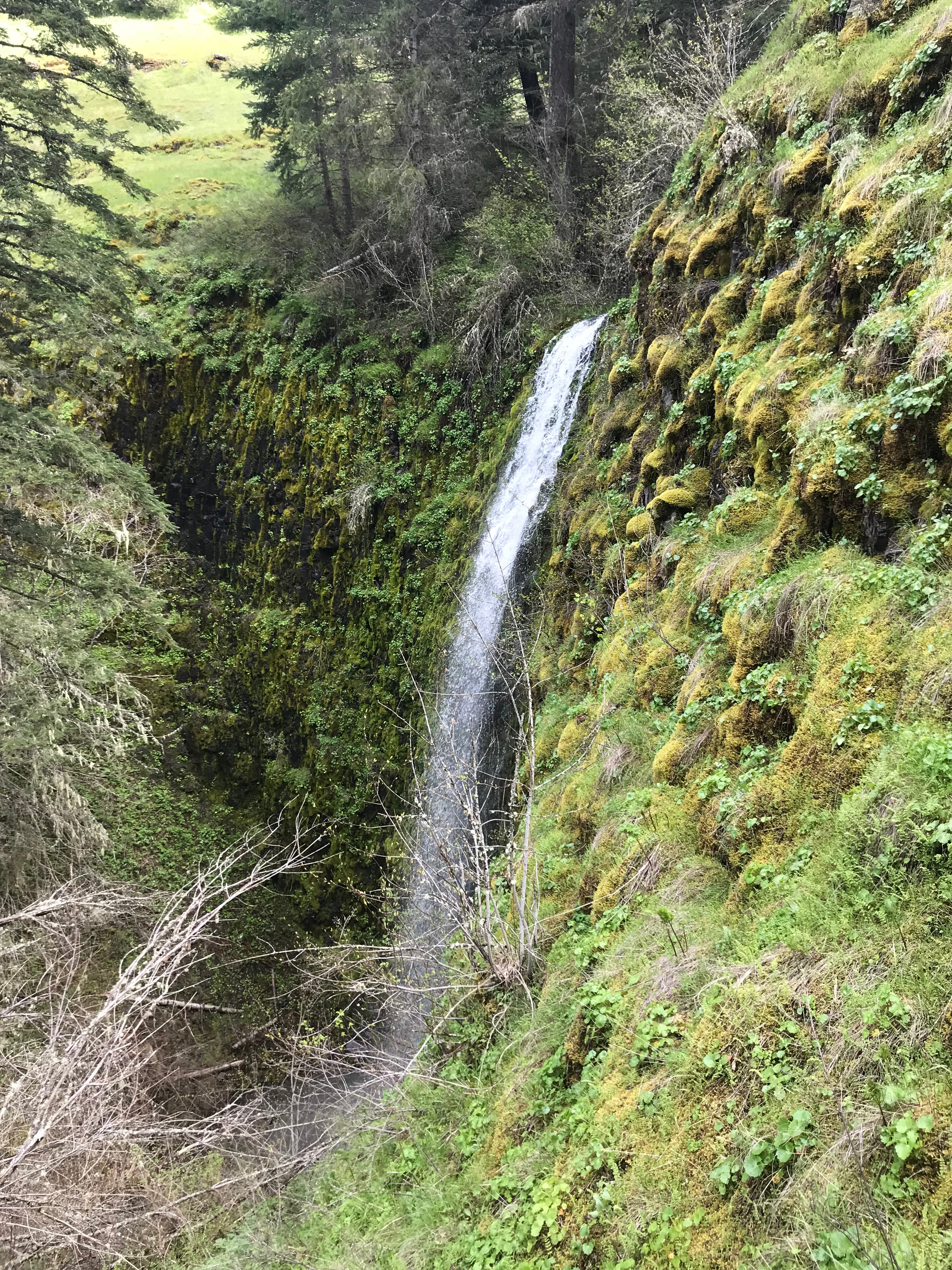
Most of us know that forests are good for water: they catch rain and snow, soak it in and slowly release it throughout the year. But did you know that forests—especially intact, structurally complex mature forests—actually make the rain as well?
Protecting the Blue Mountains is not just about protecting the landscapes themselves. It is also about protecting the intricate biological system that keeps everything downstream alive.
Forests as Water Towers
Think of a high mountain forest as a sponge built out of trees, soil, fallen logs, shrubs, moss and fungus. Lots and lots of fungus. Rain and snow land on a closed canopy that slows them down. The water soaks into deep, organic soils woven with roots and fungal threads. Some of it is taken up by trees and exhaled back into the sky. The rest moves slowly downhill, through the soil, into headwater streams and down into aquifers. The stored water is released gradually, even through the dry months of late summer when nothing is falling from above.
That slow release is what keeps a river cold, clean, and running year-round. It is what fills a salmon redd in August. It is what comes out of the tap in a town fifty miles downstream.
By the Numbers
At least 136 million Americans get their drinking water from national forests.
National forests produce roughly 15% of the country’s runoff.
Inventoried roadless areas make up 661 of the 914 watersheds on America’s national forests. More than half of those watersheds feed public drinking-water treatment facilities.
Forestland accounts for 78% of Oregon’s surface drinking-water source area. Only about 9% of that forestland is currently protected at the highest levels.
The estimated value of clean water from America’s national forests is between $3.7 and $27 billion every year.
Without deliberate protection of high-priority forests, deforestation will severely exacerbate existing historic drought trends.
Roads and Logging Break the Sponge
A forest’s water output depends on the canopy staying closed and the soil staying in place. When a forest is logged or fragmented by roads, the sponge starts to fail.
Logging roads, in particular, are dramatic: studies have measured erosion rates on roaded landscapes up to 850% higher than undisturbed forest. Sediment scours streams, fills reservoirs, kills aquatic insects and fish eggs, and requires much more costly drinking water treatment.
Salem, Oregon, spent roughly $100 million on new treatment facilities after logging in the upper Santiam watershed contributed to mass sedimentation following the 1996 floods. Seattle, by contrast, deferred a $150 million filtration-plant expenditure by decommissioning 300 miles of road in its watershed and limiting high-risk activity.
The lesson of the last century is that the cheapest, most reliable water infrastructure we have is the forest itself — and that the cost of degrading it is borne for decades by the people downstream.
A protected forest is a piece of public water infrastructure. We should plan it that way.
Forests Make Rain
Here is the part that most people have never heard.
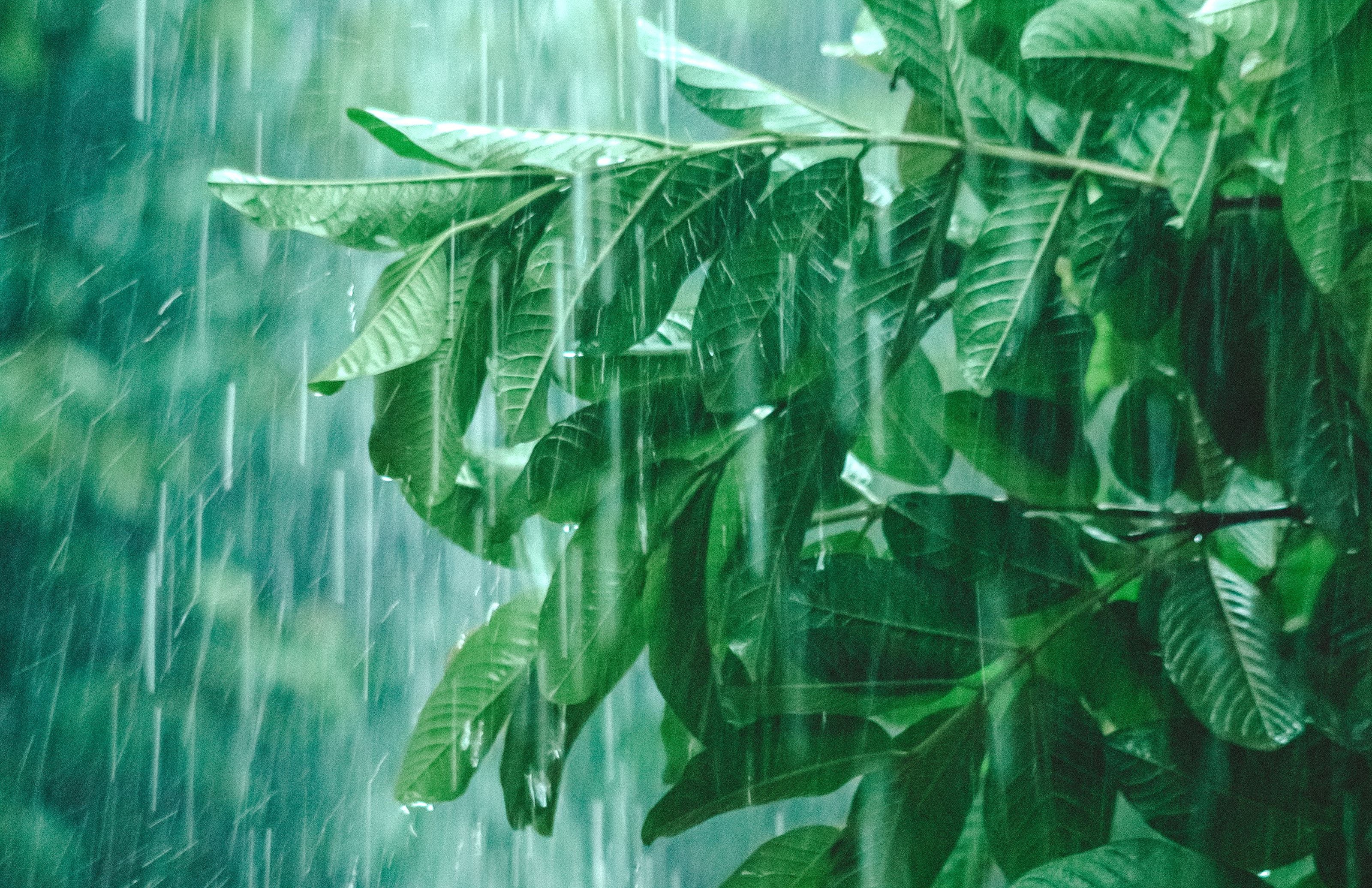
When a forest stores water and breathes it back into the atmosphere, a process called evapotranspiration, that water does not just disappear. It moves downwind. Globally, about 40% of the rain that falls on land comes from water that was first lifted from another stretch of land upwind. Forests recycle moisture across continents.
Air that has passed over intact forest produces far more precipitation downwind than air that has passed over deforested land. Across the world, the broad correlation between losing forest cover and losing reliable rainfall is undeniable. The Sahel, the Mediterranean basin, much of the American West, and parts of the loess plateau of China all tell the same cautionary tale: when the forests go, the inland dries. Deforestation and desertification, again and again, go together.
A forest is not just where the rain falls. It is part of the apparatus that brings the rain inland.
The Biomechanics of Rainmaking
On its own, atmospheric water vapor does not create rain. It needs “nuclei” to condense around to form droplets, then clouds. The majority of these cloud-seeding nuclei are the products of biological functions, called “bioaerosols.”
The more we learn about this strange, beautiful process, the more we find that mature forests produce the highest proportion of these bioaerosols. Researchers studying the air above forests have found, for example, that mushroom spores, of all things, are one of the most effective natural cloud-condensation seeds we know of. The numbers are almost hard to believe.
What the fungi are doing in the sky
Globally, fungi release roughly 50 million tons of spores into the atmosphere every year — comparable in mass to the world’s total anthropogenic primary organic aerosols.
Averaged across the entire surface of the Earth, that works out to about 1,000 fungal spores for every square millimeter of ground.
A single mushroom can release on the order of 30,000 spores per second. A large bracket fungus can release tens of billions of spores per year.
Above pristine tropical rainforest, fungal spores can account for up to roughly 45% of the coarse particulate matter in the air.
Airborne mushroom spores are coated with hygroscopic sugars (mannitol, hexoses) sugars that pull water vapor out of the air. They act as “giant cloud condensation nuclei,” growing droplets large enough to merge into raindrops.
The same molecule of water
The implication: in forests big and biodiverse enough to host abundant mushrooms, there is a positive feedback loop in the sky. Rain stimulates fungal fruiting. Fruiting mushrooms release spores. Spores ride updrafts into clouds, seed condensation, and help make the next rain. The forest is, in a literal way, breathing weather.
Logging in old, intact forests does not just remove the trees. It removes the ecological foundation of the forests’ living hydrology. It dries out the understory and slows nutrient cycling. It compacts and disturbs the soil where fungal networks live. It strips out the standing dead wood and downed logs that countless basidiomycete species depend on. The mushrooms vanish. So do their spores. So does whatever modest contribution they were making to the rain over the next stretch of country downwind.
Not All Forests Are Equal
A tree plantation, hydrologically, is nothing like an old-growth stand.
Old-growth and primary forests carry much more of the biodiversity that the water cycle quietly depends on—by whole orders of magnitude. Their canopies are deeper and more complex. Their soils are older, deeper, and threaded with fungal networks that have been building for centuries. They hold more standing snags and downed wood, the substrate for the saprotrophic and mycorrhizal fungi that release the cloud-seeding spores.
Plantation monocultures lack the diversity and species density to support this complex rainmaking machinery. Instead, they hyperventilate, pumping excess water into the air without the cooling effect of condensation, creating a feedback cycle of desiccation that takes generations to restore. Replacing an old forest with a plantation, in water terms, is not replacing it at all.
In the Blue Mountains
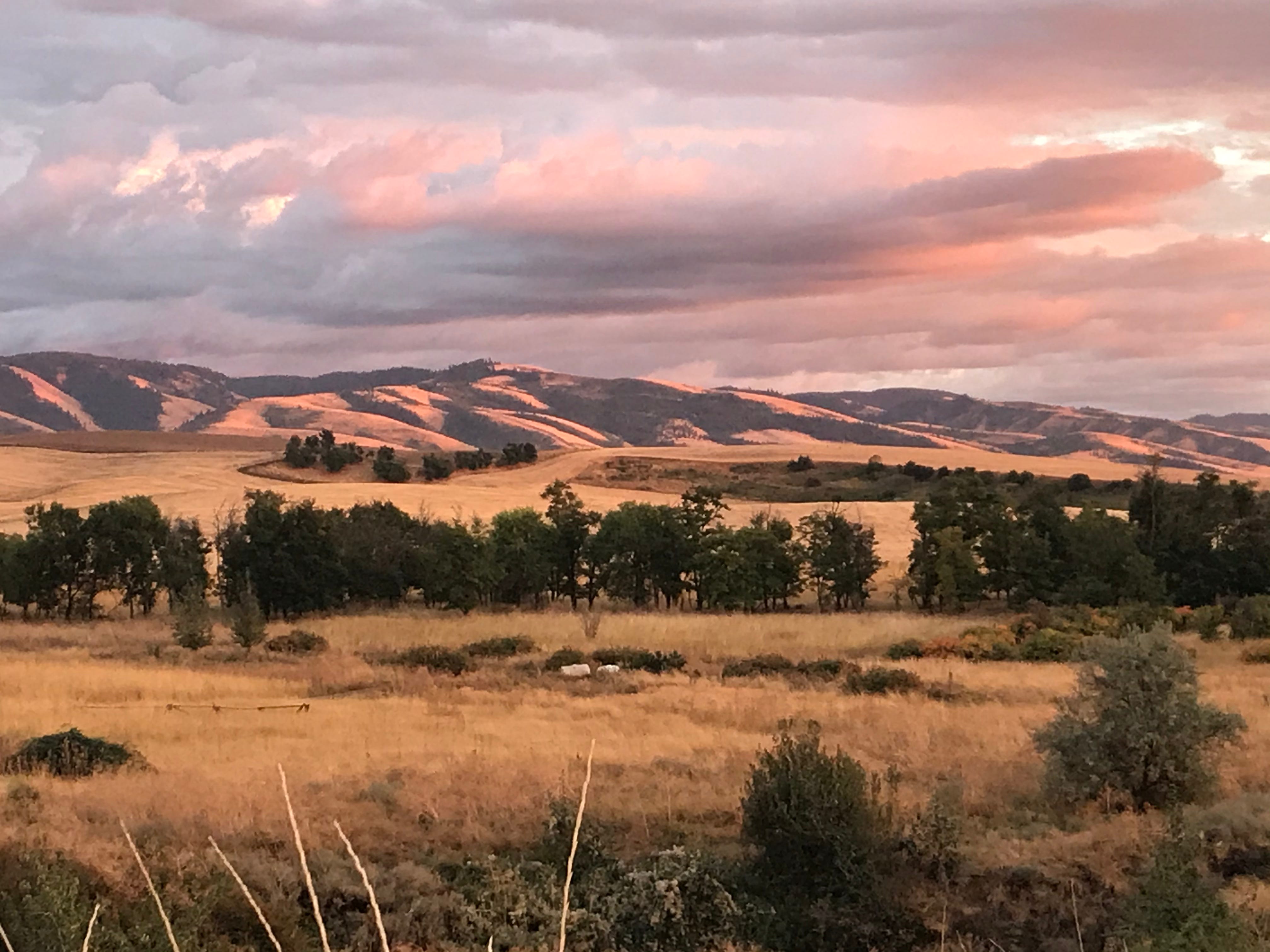
The Blue Mountains sit on the wet side of a vast, dry interior. The water that runs off their slopes feeds the John Day, the Grande Ronde, the Umatilla, the Walla Walla, the Imnaha, the Powder, the Wallowa, the Burnt, the Malheur — and through them, the agricultural valleys, the towns, and the salmon runs of eastern Oregon and southeastern Washington. The North Fork John Day, headwatered here, is the longest undammed river in Oregon.
These forests are already doing the work. The cold, clean water flowing out of the Eagle Cap and the Wenaha-Tucannon and the Strawberries is the most valuable infrastructure in the region. The closed-canopy mesic stands — grand fir, spruce, hemlock, mixed conifer — that researchers have found to run roughly 12°F cooler in summer than the surrounding dry pine type are doing temperature work that downstream salmon and downstream people will rely on more and more as the climate warms. And the immense fungal community living in their soils and their snags is part of a much larger atmospheric system providing rain to the rest of the continent, the full extent of which we are only beginning to map.
What the Blue Mountains stand to lose under continued road-building, logging, and weakening protections is not just any one of these things. It is the whole interlocked system.
What the Forest Plan can lock in
Treating the forest as water infrastructure means asking the Forest Plan Revision for four specific things.
First: protect the headwaters. Roadless watersheds in mountain country are what scientists call “hydrologic hotspots” — small in spatial extent, disproportionately large in the volume and reliability of clean water they produce. Once they are roaded or logged, much of what they do cannot be repaired on any human timescale. Treat them as the natural reservoirs they are.
Second: apply enforceable standards — not soft guidelines — to riparian buffers, mature mesic stands, and roadless lands. Standards are enforceable. Guidelines can be set aside on a project-by-project basis. The water cycle does not care about that distinction; it just responds to whether the canopy stayed closed and the soils stayed intact.
Third: stop building new roads, and decommission roads in damaged watersheds where the cost-benefit analysis already favors it. Road density correlates more directly than almost any other variable with the loss of clean, cold water from these forests.
Fourth: protect the structurally complex old and mature forests as a matter of water policy as well as climate policy. They hold the canopy, the deep soil, the moisture, the biodiversity and the structural complexity that the water cycle relies on. They are not interchangeable with plantations. The plan should never pretend they are.
The trees and the rivers and the mushrooms already do their part. The plan we choose decides whether they get to keep doing it.
It is easy to think of conservation as a defensive crouch — a perpetual scramble to slow the damage. The water story is a different kind of story. It is a story about a system that already works, that does immensely valuable things every day for everyone downstream and downwind, and that costs us nothing to keep. All we have to do is let it stay whole.
The Blue Mountains, today, are still whole enough to keep being one of the great water towers and quiet rainmakers of the interior West. The next forest plan decides whether that stays true.
Read Next: Wildlife Connectivity →
Ready to take action?