
DEEP DIVE
Conservation has a deceptively simple goal: keep the best wild places intact, and keep them connected. A reserve system is how that goal becomes a map.
What a reserve system actually is
A reserve system has two parts that work together. The first is core habitat: blocks of forest large and wild enough to sustain populations of wide-ranging animals over the long term, the kind of unbroken country where a species can find food, shelter, and room to raise the next generation. The second is connectivity: the corridors of forest that link those cores, so wildlife, plants, and genes can move between them.
Cores and corridors
A core without corridors is an island, and islands lose species over time. A corridor with no cores to connect leads nowhere. Together, they form a network that can flex and hold as the climate shifts. Protected areas are the cornerstones of conserving clean water, wildlife, large and old trees, and intact forest landscapes. Without them, the most important places are degraded one project at a time. That is why a forest plan needs strong, enforceable protections — and why those protections need to be designed as a connected whole, not a scatter of pieces.
Why the Blue Mountains need one now
Our protected areas are too few, too small, and too far apart.
Oregon has more forestland (and more carbon stored in living trees) than any of the eleven other western states. Yet it has the lowest share of its forests with strong protections: only about 10 percent. The reserves the Blue Mountains do have are isolated. Oregon’s largest wilderness, the Eagle Cap, is smaller than the five largest wilderness areas in Washington, and is dwarfed by Idaho’s largest. Only one reserve outside the northeastern Blues, the multi-unit North Fork John Day Wilderness, exceeds 100,000 acres. The gaps between reserves are wide: more than 41 miles separate the Hells Canyon and Wenaha-Tucannon wilderness areas, and nearly 46 miles separate the North Fork Umatilla and North Fork John Day. For wide-ranging wildlife, those distances are a real barrier.
No new wilderness has been protected here in more than forty years.
No new wilderness areas have been designated on national forest lands in the Blue Mountains since 1984 — even though the value of safeguarding roadless areas has been clearly understood by scientists for decades.
The Blue Mountains are a bridge the West cannot afford to lose.
Most mountain wildlife in the interior Northwest needs to move north and south to track a shifting climate. The Blue Mountains run east and west. That makes them a rare transverse link — a “mega-corridor” connecting the Cascades to the Rockies, and the Columbia Plateau to the Great Basin. As the climate changes and species need to move to survive, this connection becomes one of the most important in the entire region. It is exactly the kind of landscape a reserve system exists to protect.
The science is already done
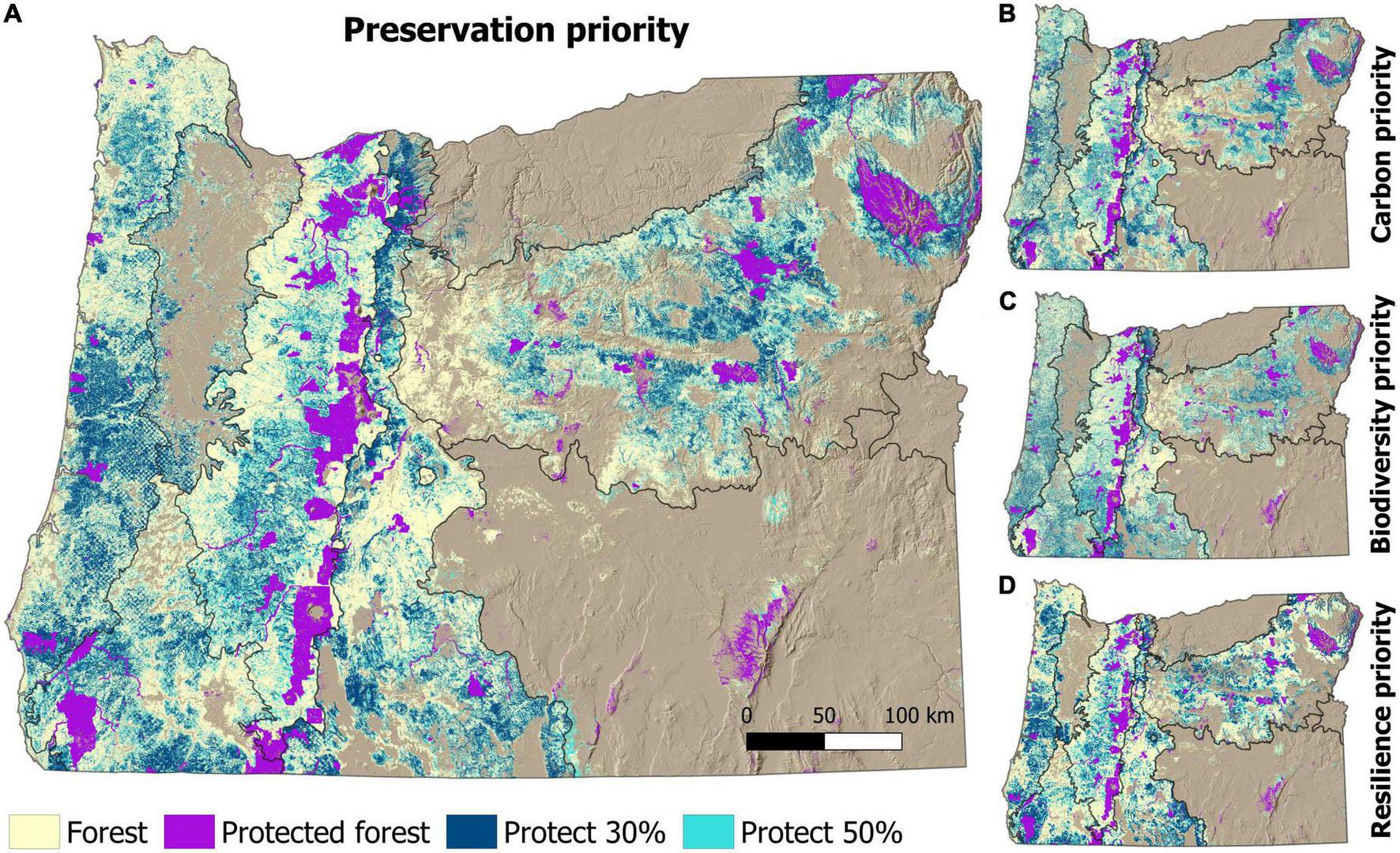
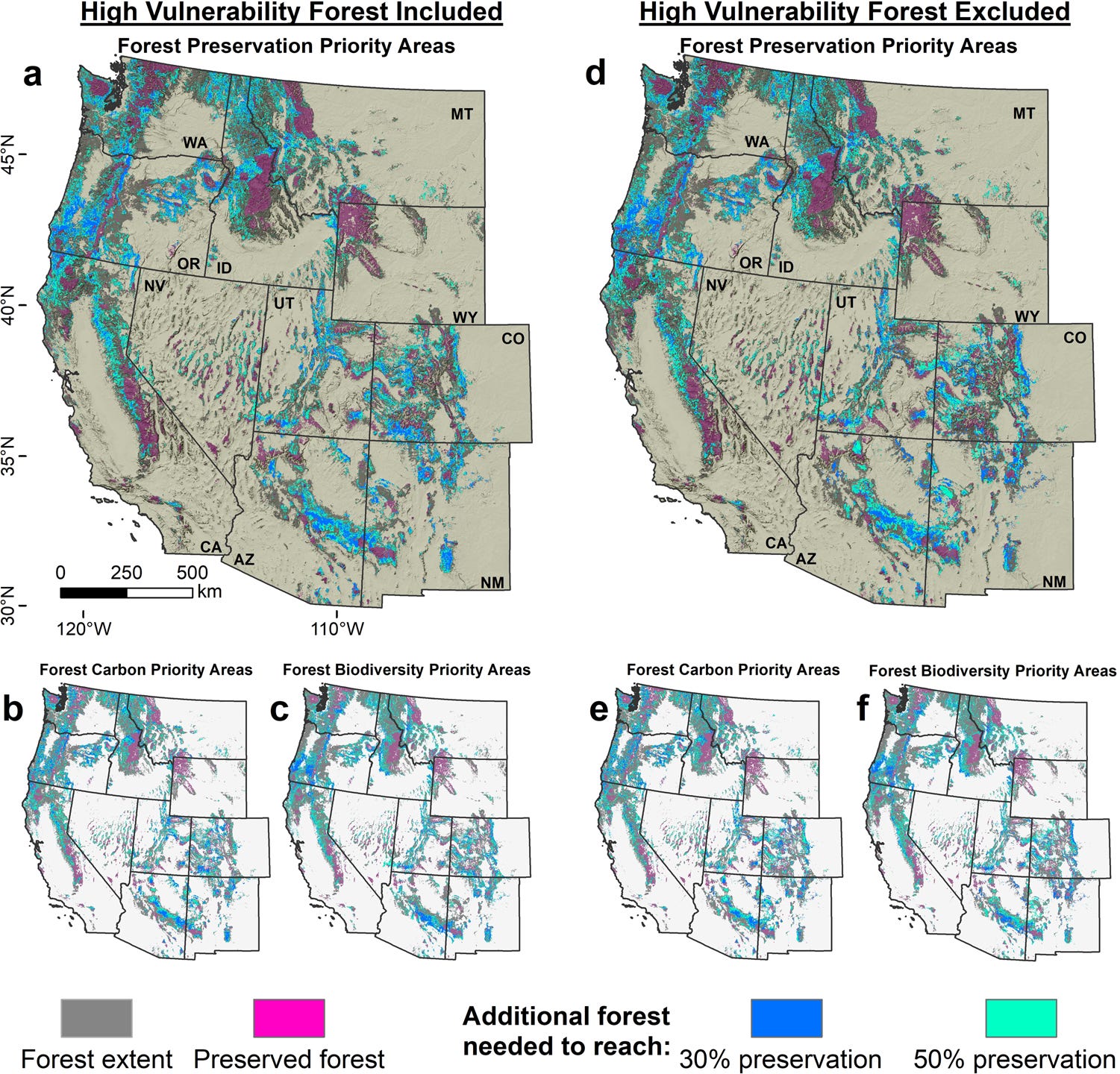
In 2021, a team of scientists led by Dr. Beverly Law published a framework for identifying where strategic forest reserves should go across the western United States, ranking forestland by its value for carbon, biodiversity, and resilience. A 2022 study then zoomed in on Oregon at fine resolution and found that more than two-thirds of the state’s highest-priority forestland for carbon and biodiversity sits on federal land — much of it in the Blue Mountains.
What is striking is how closely those priority maps line up with the region’s remaining roadless areas and with the lands the Forest Service itself has identified as having wilderness character. In other words: the wild places still standing are the same places the science says we should protect. The reserve system is not a wish. It is a dataset — one that scientists have formally asked the Forest Service to use in the current planning process.
Roadless areas: the wilderness that is already there
Much of the reserve system would be built not from scratch, but from roadless areas that already exist. These areas enlarge the reserves we have, bridge the gaps between them, and add lower-elevation forest types and habitats that the current reserves miss. They are strongholds for clean, cold water, and many of them are essential to the health of the designated wilderness they surround. Wildlife, plant communities, clean air, and water all move freely across those boundaries.
When we protect a roadless area with wilderness character, we are not creating new wilderness. We are protecting the wilderness that is already there.
