
DEEP DIVE
Anyone advocating for forest protection in the Blue Mountains will quickly meet a powerful argument: that the forest must be logged and thinned to keep wildfire away from our communities. It is a sincere fear, and fire is a real danger. But the best available science tells a different, more hopeful story about what actually keeps homes and people safe.
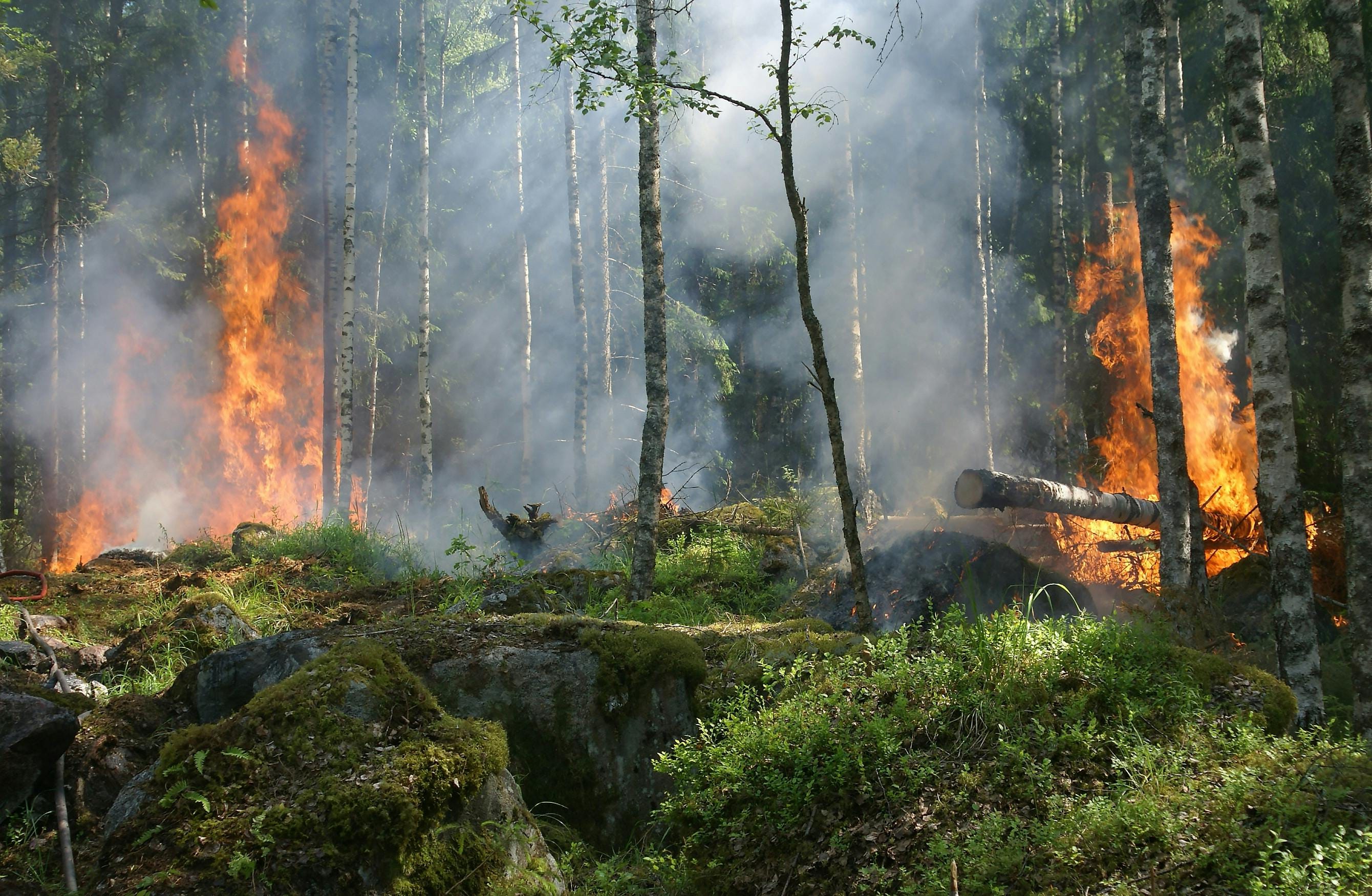
What protects a home is the home, and the few hundred feet around it
Decades of fire research point to a clear conclusion: whether a house survives a wildfire is mostly decided within 100 to 200 feet of the house itself. Hardening the home — its roof, its vents, its siding — and creating defensible space in that immediate zone is far more effective than thinning forest miles away. Logging the backcountry does not make a community safer, and it diverts time, money, and attention away from the work that does.
Most homes do not burn in forest fires at all
Here is a fact that surprises almost everyone: most homes lost to wildfire in the United States in recent years did not burn in forest fires. They burned in grass and shrub fires. In the West, where more than two-thirds of the country’s wildfire home losses have occurred, nearly 80 percent of those homes burned in grass and shrub fires, not forest fires. Fast-moving fires make up less than 3 percent of fire events but account for 89 percent of the structures destroyed, and fire moves fastest through open grass, not through forest.
The biggest fires are driven by weather, not by “fuel”
The largest, most destructive wildfires are driven primarily by drought, heat, and wind, not by how much wood is standing in the forest. Climate change is making fire weather more frequent and more extreme. And most wildfires are started by people: human-caused ignitions account for roughly 84 percent of wildfires and have tripled the length of the fire season. Most fires that cross between private and public land start on private property. Building more roads into the forest, which industrial logging requires, increases the most common source of ignitions.
Protecting a forest does not make it burn worse
It is sometimes assumed that an unlogged forest is a tinderbox. The data do not support that. Studies comparing protected and logged forests across the western United States found that protected forests do not burn more severely or more often. In fact, the reverse is true: logging opens a forest to more sun and wind, dries it out, and leaves behind younger, more uniform stands that burn hotter.
The window in which a thinning “treatment” might affect fire behavior at all is short (roughly 10 to 15 years), during which the odds that a wildfire even reaches that specific patch are very small. As soil moisture declines and shrubs and forbs fill in the gaps, severe fire risk is higher than it was prior to logging.
Logging is a climate problem, not a climate solution
Forests are one of our most powerful tools against climate change — when they are left standing. Logging releases far more carbon than wildfire does, and it is the single largest source of carbon emissions in Oregon. Treating the wild backcountry as a fire hazard to be logged gets the story backward.
Fire is a natural part of the life cycle of a forest. Logging is not. Forest hydrology recovers quickly after fires, but it takes 80 years or more to recover from industrial timber harvest.
This is not an argument for doing nothing. It is an argument for doing the right things, in the right places.
Home hardening, defensible space, community-scale preparedness, and carefully targeted work close to where people actually live—these protect communities. Protecting the wild forest core protects the climate, the water, and the wildlife. We can, and should, do both.
Read Next: The Forest Plan
Ready to speak up?